
Why Kora
Built for teams that bill their time.
Consulting firms, agencies, and donor-funded organizations share one problem: the hour is the unit, and most tools treat it as an afterthought.
When time is the product, a timesheet isn't admin — it's the source of revenue, utilization, and project health at once. That only works if entering time is fast enough that people actually do it, and if the entry is scoped to the projects a person is genuinely staffed on.
Kora treats the hour as a first-class record: billable or not, against a project and a task, feeding budget burn and the invoice that follows it.
How time carries through
Entry that takes secondsConcurrent timers, a weekly grid built for speed, and a history picker instead of retyping yesterday.
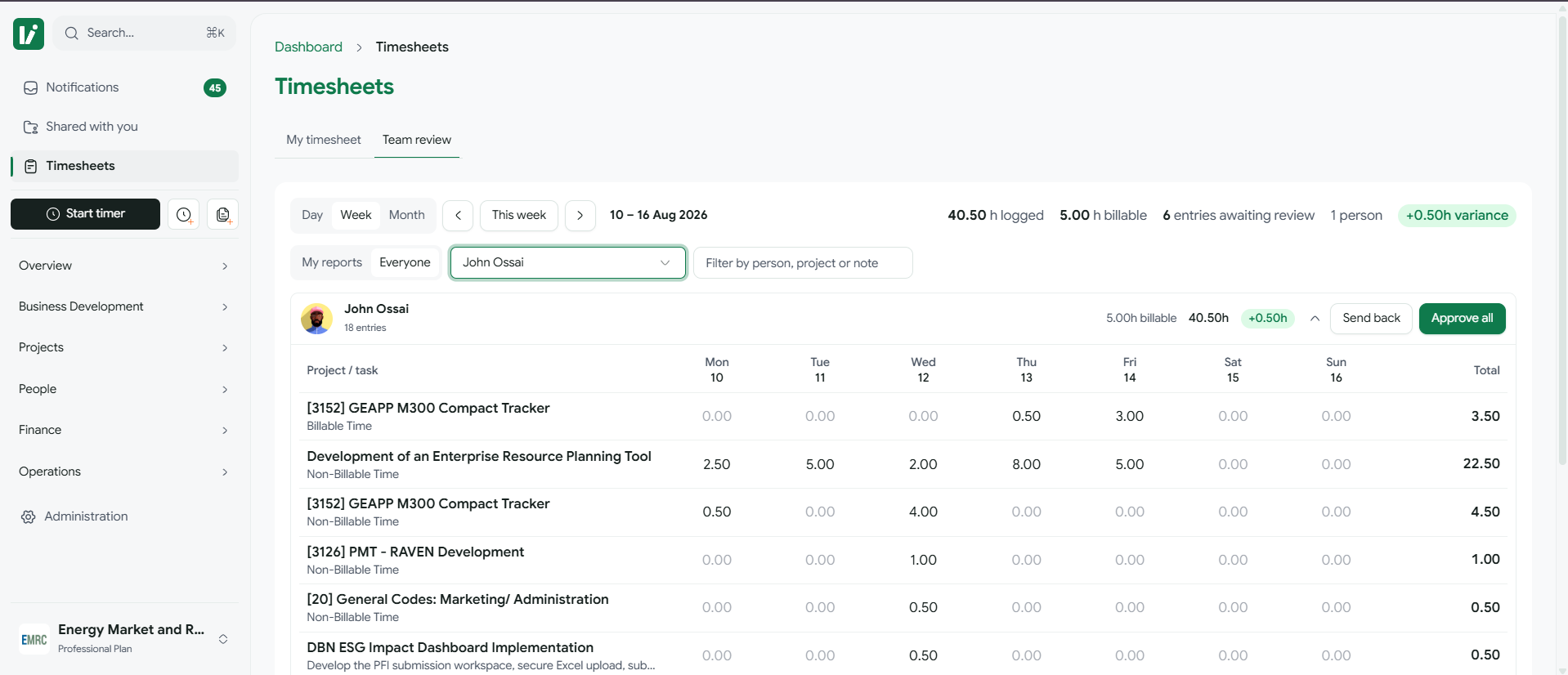
Review before it countsA submit-and-approve pass, with reviewer-only visibility into the team's time.
Budget burn as it happensBillable and non-billable hours land straight in project financials against the budget.
Then it becomes an invoiceMilestone or time-based billing drawn from the same entries, issued on a real invoice canvas.
Hours in. Invoices out.
The weekly grid, the approval, the budget line, and the invoice are four views of the same entries.
Keep reading
The rest of the case.
See it against your own work
Bring a live project and we'll walk it through Kora end to end.
Request a demo