
Why Kora
One system, because the work is already connected.
Delivery, finance, and people aren't separate processes. Running them in separate tools is what makes them feel that way.
A milestone marked complete by the delivery team is the same fact finance bills from. A person's department decides both who approves their leave and whose pipeline they can see. These aren't integrations between systems — they're the same record, read by different teams.
Kora keeps them as one record. Nothing is exported, re-keyed, or reconciled at month-end, because there is no second copy to reconcile against.
What that changes
A project is created onceScope, budget, department, and team — read by timesheets, billing, and reporting alike.
Billing starts from deliveryAn invoice request is built from the milestone delivery marked billing-ready, not a re-typed figure.
Reports read the originalDashboards aggregate the same records, so two teams can't arrive at two different answers.
Approvals arrive in one placeMilestone sign-off, invoice requests, leave, and timesheets queue in a single inbox.
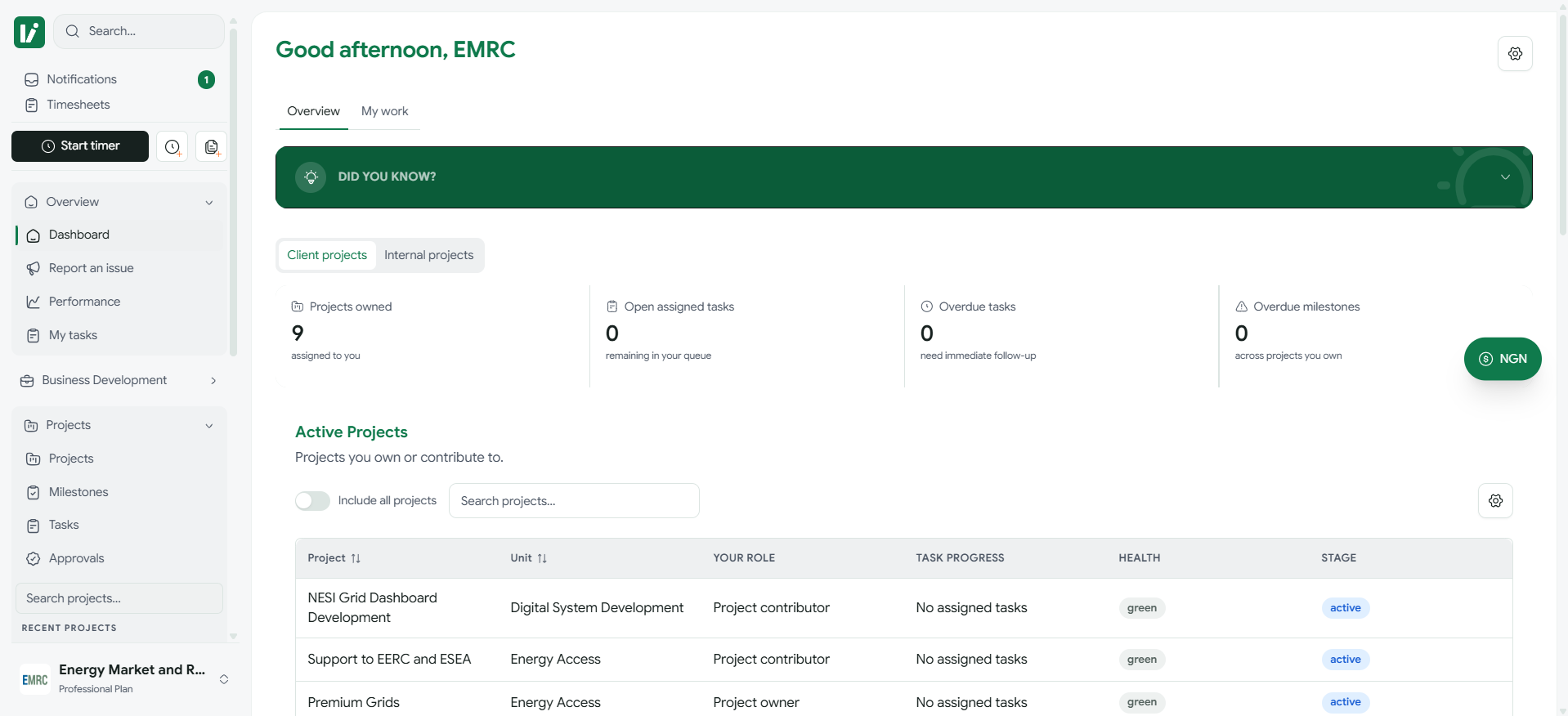
One record, four teams.
The same project object carries scope, logged time, billing readiness, and reporting — no hand-offs between systems.
Keep reading
The rest of the case.
See it against your own work
Bring a live project and we'll walk it through Kora end to end.
Request a demo